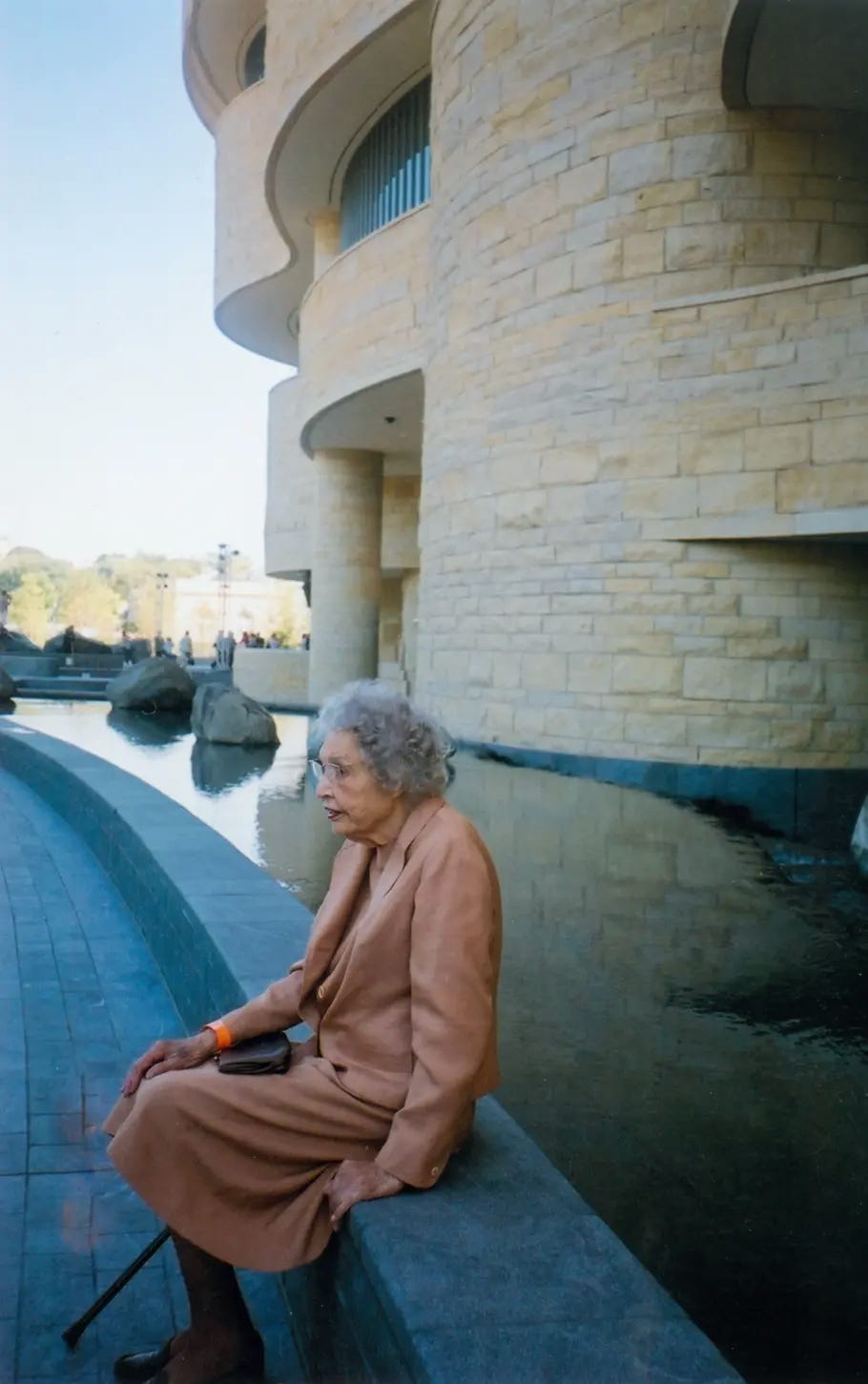
Mary Golda Ross was born in Oklahoma in 1908 as a Cherokee. In 1928, she graduated with a degree in mathematics from the Northeastern State Teacher’s College in Tahlequah, Oklahoma, which was once the Cherokee Female Seminary, one of the first educational institutions for women in the western Mississippi River area. She began teaching math and science at public schools before becoming an advisor for female students at a government-run boarding school for Native Americans. During this time, she worked in the summers to earn her master’s degree in mathematics.
In 1942, during World War II, Ross had the opportunity to join the Lockheed Aircraft Corporation as a mathematical research assistant where she specialized in understanding how aircrafts respond to aerodynamic forces. Through this work, Ross decided to pursue advanced aeronautical engineering courses, eventually qualifying her as a registered professional engineer in 1949. This made her the first known female Native American engineer. Ross’s work with Lockheed Aircraft Corporation then led to work with their new company, Lockheed Missiles and Space Company, where she worked on submarine-launched missiles and the Agena launch vehicle, which transported military, intelligence, and civilian materials to space. Unfortunately, due to the confidential nature of her work, much of what she did remains unknown and classified, though she did contribute to NASA’s Interplanetary Flight Handbook, Vol. 3 (1963), which provided spacecraft flight paths to Mars and Venus and was used to aid the work of human spaceflight researchers.
Ross was considered a legend to Native American engineering students. She retired in 1973 but continued to encourage her Native American culture through the Smithsonian’s National Museum of the American Indian (NMAI) and attended the 2004 opening of the NMAI in Washington, D.C., to which she gave more then $400,00 to the museum toward an endowment. Ross died in 2008 at the age of 99, just four months short of 100.